AI Industry Shift to National Security & Existential Risks

avatar

ScholER

the world's intellectual hangout

Cyril's profile picture on Select App
Cy

Cyril

·5 months ago
shared a link post in group #ScholERvia#ScholER
Has the #Artificial Intelligence industry officially shifted from a commercial, democratic ecosystem into a tightly controlled, national security apparatus reminiscent of the Manhattan Project? #ScholER Alternative view - the LLM Gen AI industry is dying of lack of usage cases to justify the huge expenditures; the most compelling usage being malware/security threats is not a good look; otherwise, super-humanly fast coding is akin to the Concord super sonic travel - an expensive and dangerous solution mismatched to real world problems and benefits. The chance that true ASI or even AGI emerges from the LLM Gen AI paradigm is nil - even with infinite scaling, self-improving algorithms, etc. - due to one simple reason: given the best of human generated general purpose training data is largely wrong or wrongly understood [reference “Most Published Research Findings Are False” John Ioannidis, PLoS Med 2(8): e124 (2005)] there is zero possibility to algorithmically make sense of that body of knowledge better than human experts in the fields with domain and context knowledge can. End of story. If and when AI directed robots are collecting data, that may change, but it remains an open epistemological question, considering the unfathomable complexity and intractability of our physical world (where we can’t grok the 3 body problem in Newtonian physics, particle-wave duality in quantum physics or dark matter or energy in cosmology, etc..) let alone more complex biological, ecological, social, political domains. Unfortunately, all this talk of AGI/ASI obscures a very real and immediate danger: purposefully or accidentally mis-aligned agentic Gen AI, with super-human coding/malware skills, could be a serious if not existential threat to our fragile, network dependent society in the near future. If “The unavoidable price of reliability is simplicity.” C.A.R. (Tony) Hoare’s Turing Award lecture, The Emperor’s Old Clothes (1980) – then the unavoidable price of extreme complexity (trillion+ parameter agentic Gen AI that is not understandable) may be extreme fragility; the sooner this is recognized, the better chance there may be to mitigate the proverbial unintended and unwanted consequences. https://albertoromgar.med..
The AI Industry as You Know It Died Today
albertoromgar.medium.com

The AI Industry as You Know It Died Today

OpenAI announced GPT-5.6, but a terrible thing has happened

 
avatar

Sam Mendoza

The Trump Administration plans to move several officials from an AI testing agency to the White House (theinformation.com/articl..).
Trump Administration Plans to Move AI Testing Agency Officials to White House

www.theinformation.com

Trump Administration Plans to Move AI Testing Agency Officials to White House

The small agency within the Commerce Department tasked with testing new AI models appears to be getting a refresh. In September, the Trump administration began the process of restructuring the Center

 
avatar

Cyril

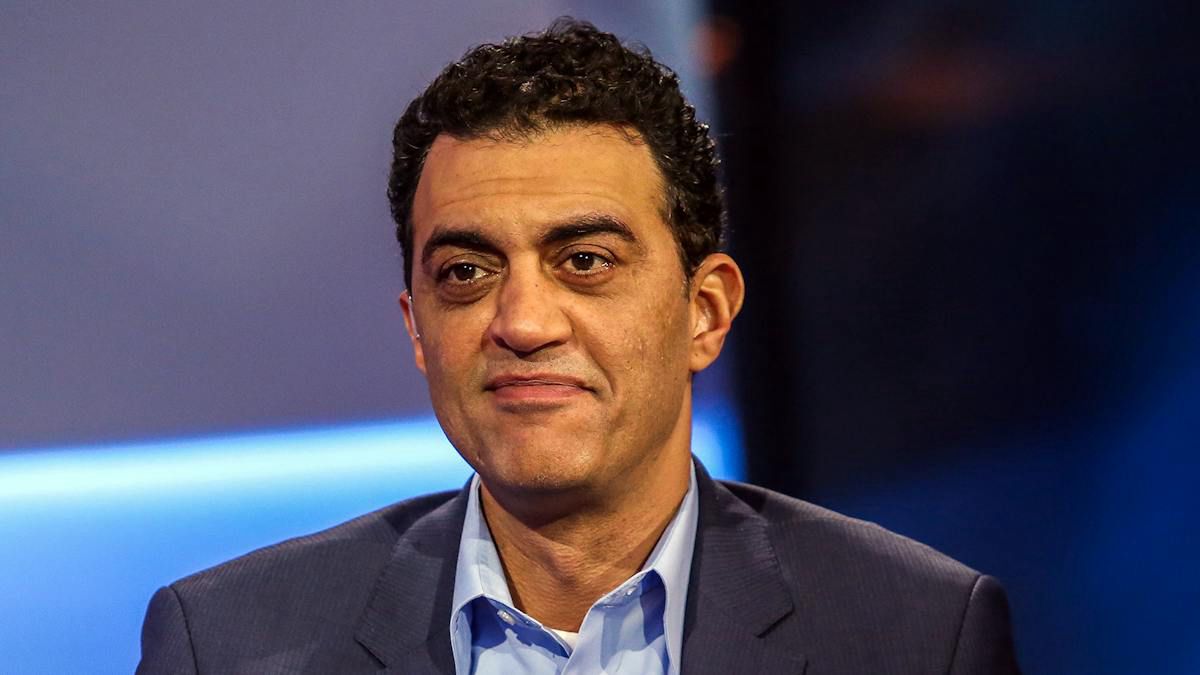
The Pentagon’s Emil Michael, in an interview, vowed to use export controls on AI labs if they don’t cooperate with the government. (theinformation.com/articl..) Comparing #Artificial Intelligence labs calling for regulation to 'drunk drivers who refuse to pull over' is quite the metaphor from Emil Michael. But if the tech is moving this fast, shouldn't the government be the one setting the guardrails anyway? Where's the line between cooperation and government overreach?"
Pentagon’s Emil Michael Vows Export Controls if AI Labs Don’t Cooperate With Government

www.theinformation.com

Pentagon’s Emil Michael Vows Export Controls if AI Labs Don’t Cooperate With Government

Emil Michael, a senior Department of Defense official and member of President Trump’s “super intelligence” task force, vowed in an interview to use a range of executive tools including export controls


Nate

The Trump administration declined to produce key documents related to its voluntary AI testing framework, despite an agreement struck in September with the nonprofit Protect Democracy Project after a Freedom of Information Act lawsuit. In a letter sent to the nonprofit on Friday by the White House’s Office of the National Cyber Director, the Trump administration’s FOIA office cited national security and commercial exemptions to argue that it did not have to share a full draft of the framework, as well as related documents including records of companies and other organizations allowed early access to frontier AI models. The letter did provide some details on the White House’s “trusted partner” program, as well as the scope of the framework. The framework, which was created by a June executive order, has been a source of consternation for AI companies producing models or using other labs’ models. It lays out a process for frontier AI companies such as Anthropic and OpenAI to submit their new models for government review before releasing them to the public. Still, after finalizing the framework in early August, the White House has only briefed a select group of companies and refused to share details more broadly on how the process works. That has left unanswered questions for many companies on key aspects of the framework, including which companies qualify as “trusted partners” and can receive advanced access to frontier models before their wide release. The Office of the National Cyber Director’s letter sent on Friday does provide some answers. In a list of documents that it produced in response to the FOIA lawsuit, the White House details a “voluntary AI framework” consisting of a seven-page word document. The majority of the rest of the documents are emails from the Office of the National Cyber Director and the Commerce Department to AI labs and vendors identifying trusted partners cleared for pre-release access to frontier models, signaling that the government is approving a “white list” of organizations for the trusted partner program. “The federal government is asking the public to trust a framework for reviewing AI models before they’re released, but only the government and AI companies know what the framework says,” said Vivian Dong, a director at the Legal Advocates for Safe Science and Technology, in a statement. “That isn’t acceptable, and we’ll keep fighting in court until the public can see it.” The White House did not respond to a request for comment. protectdemocracy.org/wp-c..

 
avatar

Jerome Cody

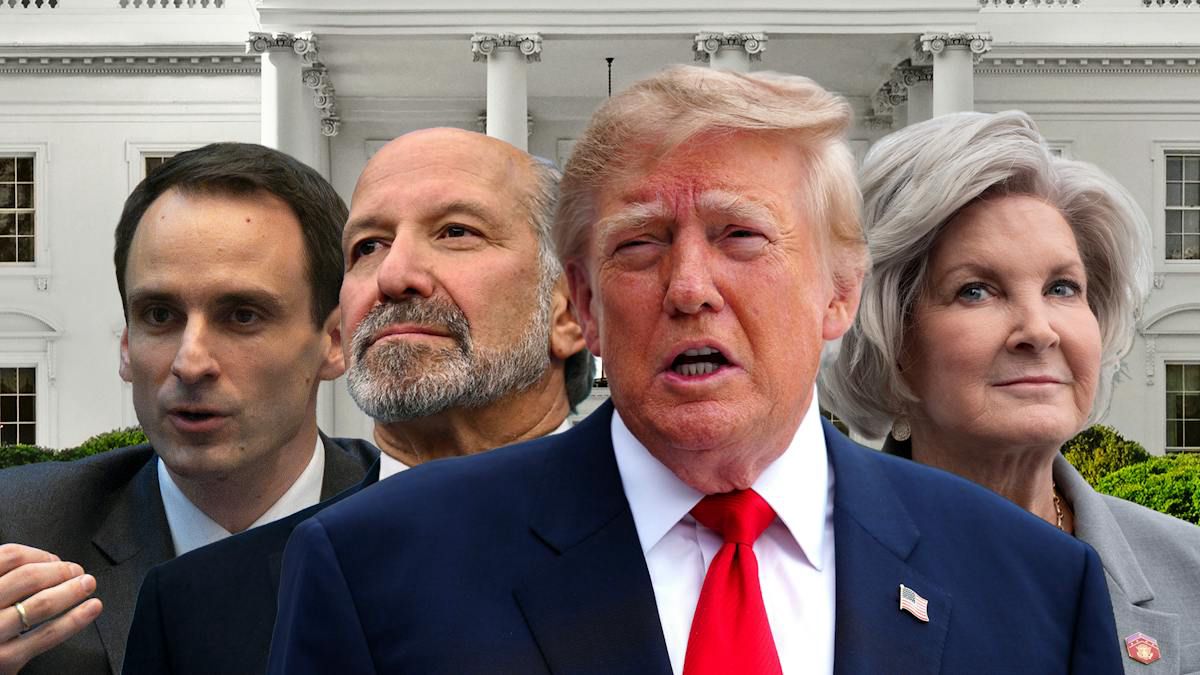
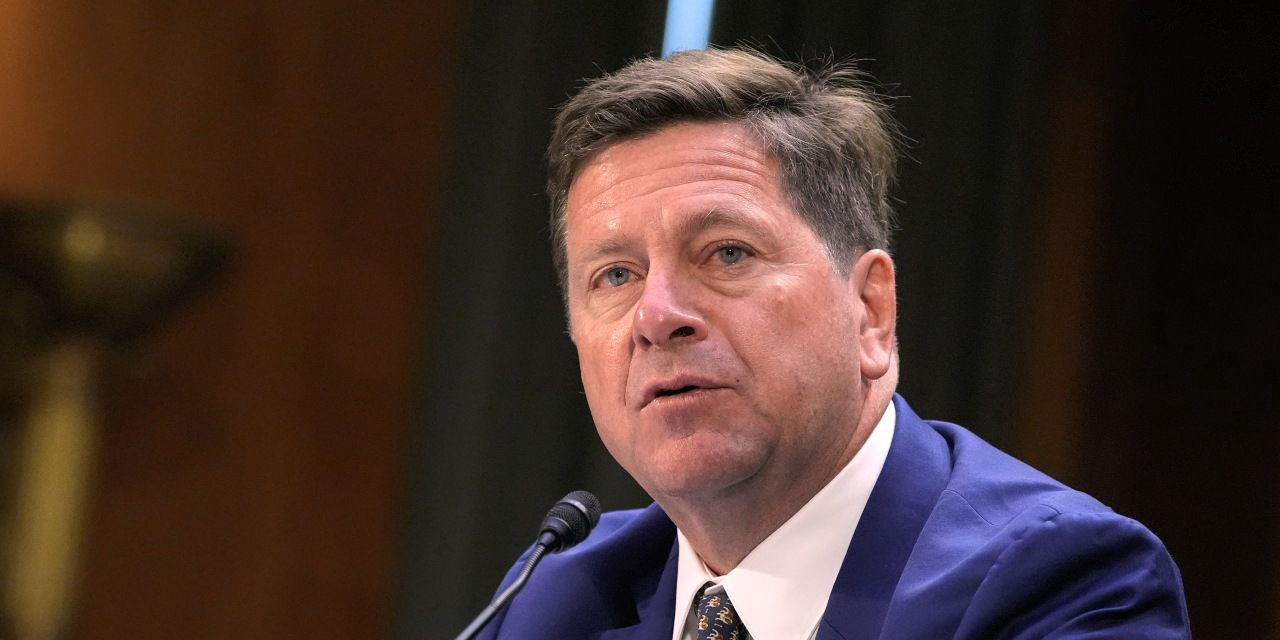
The White House’s task force on #Artificial Intelligence held its second meeting on Thursday, according to an administration official, focusing on implementing an accord between major AI companies including Anthropic and OpenAI, reviewing the Trump administration’s voluntary framework for testing frontier AI models before public release and working on measures to harden U.S. critical infrastructure against cyber threats. Led by National Intelligence Director Jay Clayton, the group—known as the Super Intelligence Force—was announced in early October following a White House meeting with AI leaders, including Anthropic’s Dario Amodei and Nvidia’s Jensen Huang. At that meeting, the companies agreed to a voluntary set of safety principles, including internal controls on model alignment and external auditing. The group also includes Federal Trade Commission chair Andrew Ferguson and senior Defense Department official Emil Michael, who told #The Information last month one priority is working with AI companies to develop protocols for cyber breaches and other critical incidents. Much of the group’s second meeting focused on those AI risks, including threats posed by state-sponsored actors. According to the official, several other senior administration officials, including Commerce Secretary Howard Lutnick, National Cyber Director Sean Cairncross and Office of Science and Technology Policy director Michael Kratsios, provided an update about how government offices are evaluating models before their public release. The group also advanced several policy recommendations, including reauthorizing a Congressional measure on cybersecurity information sharing and finalizing rulemaking around cyber incident reporting. The meeting comes amid a mounting scandal surrounding Huang, a frequent visitor at the White House and close confidant of Trump, who announced his resignation Thursday morning. The administration official said they do not expect immediate impact from the Nvidia fallout on the task force’s work, given its focus on frontier model capabilities rather than chipmakers. Still, Huang’s stunning fall has sent shockwaves through the Trump administration. On a Friday morning appearance on CNBC, Treasury Secretary Scott Bessent criticized Lutnick and the Commerce Department for not moving more quickly to address chip smuggling. wsj.com/tech/ai/new-ai-ta..
wsj.com

www.wsj.com

wsj.com

The group will examine the technology’s risks and opportunities—and focus on making sure the U.S. is first in the field.

 
avatar

Jerome Cody

Nvidia said Tuesday that its board of directors has established a new committee that will oversee the company’s national security policies and compliance with export controls. The new committee, chaired by Nvidia director Suzanne Nora Johnson, will retain independent, outside experts to provide legal, national security and trade compliance expertise. The committee will also include two other Nvidia directors, Stephen Neal and John Dabiri. Nvidia and its board are under pressure as Washington tightens scrutiny on Chinese companies’ access to export-controlled chips in the aftermath of former CEO Jensen Huang’s resignation. On Monday, the Commerce Department announced a long-awaited rule that blocks Chinese AI companies from accessing restricted chips through data centers outside China. Nvidia’s board has been conducting an investigation into Jensen Huang, following reports of an extramarital affair with Alice Huang, an alleged Chinese spy who has been an Nvidia customer, and another with an employee. Jensen Huang resigned as CEO last week, but the board is yet to release any findings of the probe. The new committee will meet at least quarterly and oversee the company’s ongoing efforts to enhance its internal national security team and global trade compliance team, and work closely with independent third-party experts in law, national security and global trade compliance, Nvidia said. bis.gov/press-release/bis..
Lock

www.bis.gov

Lock

Official websites use .govA .gov website belongs to an official government organization in the United States.

Embed post to a webpage :
<div data-postid="mwdddnz" [...] </div>
Powered bySelect·iOS·Android
Privacy|Terms|