Tech Giants Turn to Nuclear Power for Data Centers

avatar

ScholER

the world's intellectual hangout

Sam Mendoza's profile picture on Select App
SM

Sam Mendoza

·2 years ago
shared a link post in group #ScholER
Tech companies are increasingly turning to nuclear power to meet the growing energy demands of data centers, which consume vast amounts of electricity. A Goldman Sachs study estimates that data centers account for up to 2% of global energy consumption, a figure expected to double by 2030 due to the increasing demand for cloud services and #Artificial Intelligence . Several major tech firms are exploring nuclear solutions. For example, **Google** has partnered with Kairos Power to develop small modular reactors (SMRs), which are more compact and cost-effective than traditional nuclear plants. They plan to deploy these reactors by 2030. These SMRs could address safety concerns, as they generate less heat and use passive cooling systems, reducing the risk of accidents. **Microsoft** is taking a different approach by reviving a dormant reactor at Three Mile Island, aiming to power its data centers by 2028. Meanwhile, **Amazon** is directly sourcing energy from an existing nuclear plant for one of its facilities. Although these initiatives show promise, challenges remain, including the untested nature of SMR technology and the issue of nuclear waste management. Despite this, experts believe that nuclear power could play a crucial role in supporting the growing energy needs of tech infrastructure https://www.voanews.com/a.. #ScholER
Tech firms increasingly look to nuclear power for data center
www.voanews.com

Tech firms increasingly look to nuclear power for data center

Facilities that power cloud computing and artificial intelligence consume vast amounts of electricity, posing challenges for companies' promises to reach net-zero emissions

 
avatar

Sam Mendoza

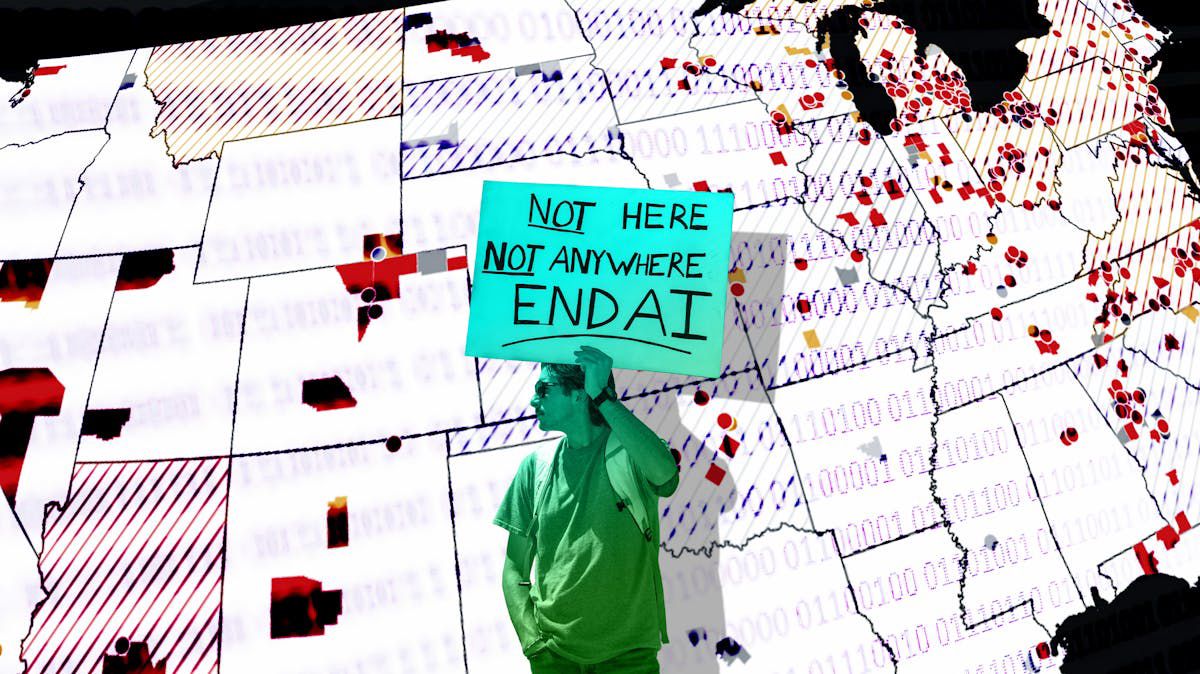
A couple days ago, John Carmack, a videogame pioneer and former virtual reality executive at Meta Platforms, wrote on X that he had begun seeing anti–data center yard signs popping up in his neighborhood. “I am entertaining the idea of paying for a billboard with something like ‘Data centers are awesome, Texas should lead!’” wrote Carmack, who has co-founded an AI startup, Keen Technologies. In a follow-up post, Carmack compared the brewing public hostility toward AI to the domestic backlash against nuclear power, which snowballed after the Three Mile Island accident in 1979. “I consider it a tragedy that anti-nuclear efforts largely strangled nuclear power in the US based on vibes, and I don’t want to see that happen to AI,” he wrote. It’s going to take a lot more than billboards to fix AI’s brand problems with the American people. #The Information showed just how deeply communities across the country are opposed to data centers with a map and story that documents the more than 300 cities, towns, counties and states that have enacted temporary or permanent data center bans since 2023. A whopping 275-plus of those measures have passed this year alone. It’s too soon to tell how effective these measures will be in slowing down AI’s progress. The vast majority of them are temporary, for instance. Still, AI’s messaging problem is a real one. At times, it feels like Silicon Valley investors and entrepreneurs are more interested in responding to the backlash with snarky, unserious posts on X or by pouring funds into dark-money organizations aimed at bringing down perceived political enemies of #Artificial Intelligence . It’s not like there are no positive stories for them to tell about the benefits of AI data centers. This week, our AI Infrastructure columnist, Ann Davis Vaughan, pointed out that hundreds of teachers in Richland Parish, La., are set to receive $50,000 bonuses this year thanks to swelling tax receipts from a Meta Platforms AI facility in the area. Sometimes I wonder—putting my conspiracy hat on—if leaders in the AI ecosystem have decided they don’t really need to convince the public why AI and data centers are so important for Americans to embrace. Perhaps they don’t think persuasion will work. Or maybe they believe that before long they’ll be able to bypass the public blowback against data centers by putting them in space, away from pesky community activists. Both attitudes are wrongheaded. If they want Americans to accept AI, they need to talk to them, not just to their reply guys on X. theinformation.com/articl..
The 300-Plus Bans and Moratoriums Threatening the U.S. Data Center Boom

www.theinformation.com

The 300-Plus Bans and Moratoriums Threatening the U.S. Data Center Boom

Since the start of the year, cities, towns, counties and states across America have slammed the brakes on allowing new data centers in their backyards. By exhaustively combing through a combination of legal documents and local news reports, The Information has identified more than 300 temporary ...


Nate

Weeks ago, Greg Abbott, the Republican governor of anything-goes Texas, brought the construction of 1,800 data centers in that state to a standstill over concerns about their power and water use. And then on Tuesday, Josh Shapiro, the Democratic governor of Pennsylvania, issued an executive order that tightly restricts data center expansion in his state. Then there was the pee ad that went viral on Wednesday from Liquid Death and the beer company owned by ex-NFL stars Travis and Jason Kelce: The two startups joined up to cajole people to consume copious amounts of weak pilsner and canned water, urinate and then mail off their bodily fluids to a stockpile, which they promise to share with data centers to use in their liquid-cooling systems. They’re kidding, I think, but I can’t entirely be sure: Neither Liquid Death nor the Kelce brothers’ Garage Beer would comment for this story. (According to TechCrunch, it’s theoretically possible to use urine to cool data centers. Take that as you will.) techcrunch.com/2026/08/20..
OK, can we actually cool data centers with our pee? | TechCrunch

techcrunch.com

OK, can we actually cool data centers with our pee? | TechCrunch

Jason Kelce joked that people should cool data centers with their pee, rather than potable water -- but his suggestion is not completely ludicrous.

 
avatar

Cyril

Elon Musk lamented a global “crisis of power” on Tuesday as the Tesla and SpaceX CEO spoke virtually at a G20 innovation event hosted in North Carolina by the White House Office of Science and Technology Policy and the Commerce Department. Musk cited a likely 15 gigawatt shortage of power next year for AI chips, calling on other countries to build data centers that could service AI companies desperate for computing capacity. In a brief virtual interview with Office of Science and Technology Policy director Michael Kratsios, Musk predicted that AI will grow the global economy by 20-30% annually. He also predicted that a billion humanoid robots—including those Musk’s Tesla are building—will be available in the next decade. The robots will be five times more productive than humans, he said. Musk’s compensation package at Tesla is partially tied (e.customeriomail.com/e/c/..) to the success of the company’s robot product, dubbed Optimus. Opening the program, Kratsios said the event is designed to build consensus around the “Carolina Principles, or guidelines that encourage companies to invest in frontier technologies while adopting limited regulation. After Musk spoke, former White House AI czar David Sacks derided the idea of the U.S. government building a “FDA for AI” that would approve new AI models before companies release them to the public. The Information reported (e.customeriomail.com/e/c/..) last week that an executive order draft that would establish a self-regulatory organization for AI companies has stalled within the Trump administration. Nvidia CEO Jensen Huang and OpenAI CEO Sam Altman are expected to speak on Wednesday during the second day of the event.


Tasia

An expected $15 trillion #Artificial Intelligence buildout is transforming how data centers get funded and constructed, and how investors assess their risk (theinformation.com/articl..).
Why AI's $15 Trillion Buildout Is Rewriting the Rules of Data Center Financing

www.theinformation.com

Why AI's $15 Trillion Buildout Is Rewriting the Rules of Data Center Financing

The unprecedented scale of capital and resources dedicated to the AI buildout is breaking the mold of how data centers get financed and constructed. It’s also raising new questions about how investors

 
avatar

D J

Interesting to see tech giants using obscure special purpose entities and middleman developers to keep huge data center lease commitments off their main balance sheets. Is this just smart structured finance, or are we quietly building systemic credit risk in the tech sector? if you hold a standard high-yield ETF in your 401(k), you're probably already funding the physical real estate behind OpenAI, Anthropic, and Nvidia without knowing it. theinformation.com/newsle..
AI Data Center Debt Is Showing Up Everywhere

www.theinformation.com

AI Data Center Debt Is Showing Up Everywhere

Debt financing for data centers and related infrastructure has grown rapidly enough that it’s become its own category these days—credit analysts are breaking out AI versus non–AI-linked debt across ma

Embed post to a webpage :
<div data-postid="mzdeebz" [...] </div>
Powered bySelect·iOS·Android
Privacy|Terms|