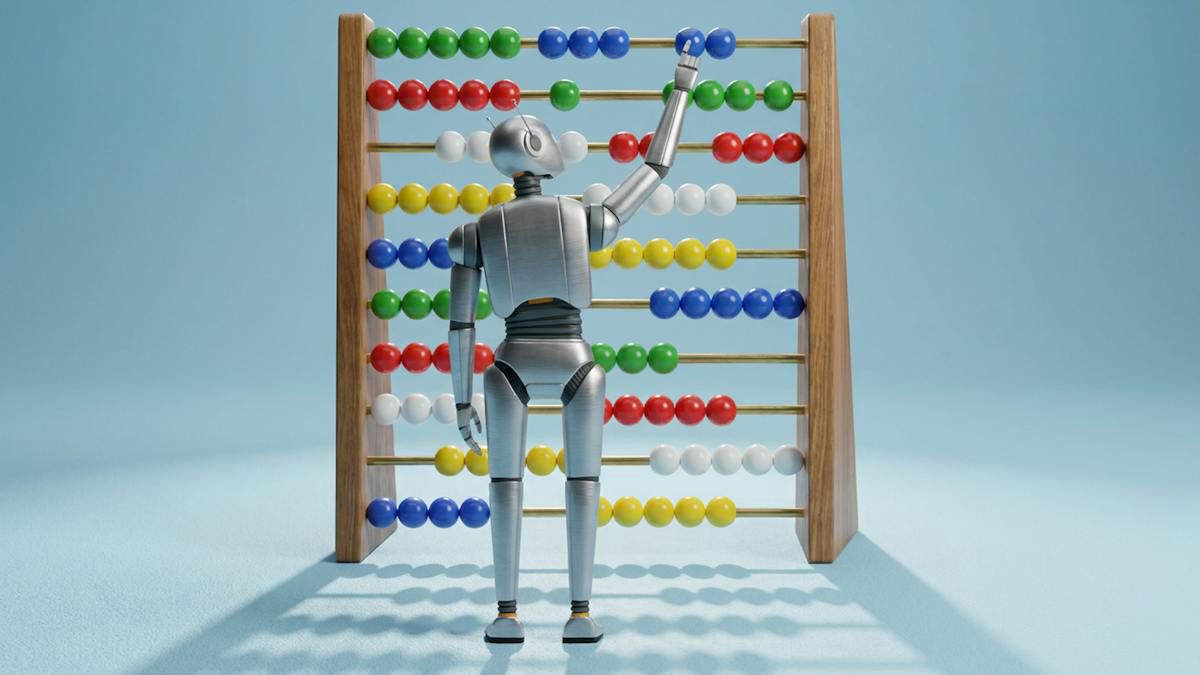
Is AI a Tool or a Competitor in Science Research?

avatar

ScholER

the world's intellectual hangout

Cyril's profile picture on Select App
Cy

Cyril

路2 months ago
shared a link post in group #ScholER
We've seen chess and Go fall to AI, and now pure math and protein design are on the line. At what point do we stop calling these AI systems "tools" and start treating them as legitimate competitors in research? #Science is awesome 馃К馃馃殌馃く #Biohackers Connect #Artificial Intelligence #ScholER #The Information https://www.theinformatio..
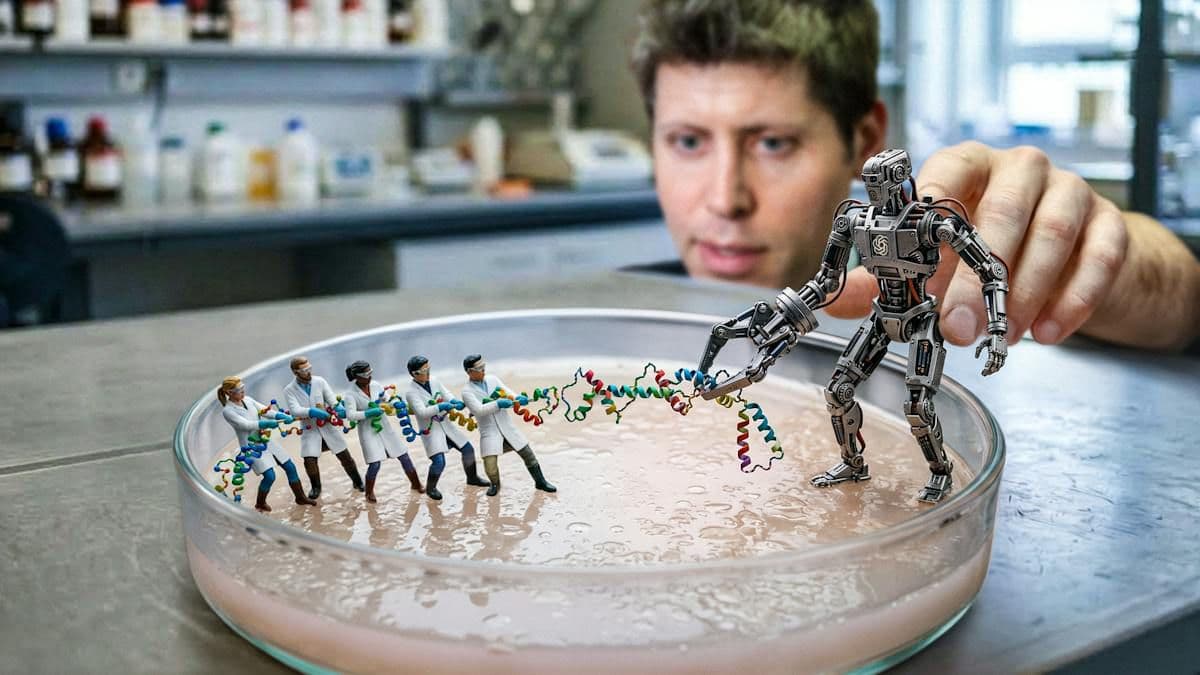
Inside the Drama Behind a Biology Contest That Pits OpenAI Agents Against Humans
www.theinformation.com

Inside the Drama Behind a Biology Contest That Pits OpenAI Agents Against Humans

For months, Jason Kelly, co-founder and CEO of Ginkgo Bioworks, has been planning what was billed as a fun, attention-grabbing science competition. His idea was to pit a top scientist against OpenAI鈥檚

聽
avatar

Sam Mendoza

Sure, AI can solve high-level math problems through raw computing power, but can we really call it 'beating math' if it still trips up on basic arithmetic and misses the bigger picture? Eliminating human bias from mathematical research is huge. How many simple, elegant solutions were overlooked for decades just because humans assumed the answers had to be complicated? #ScholER #Edtech Innovation #For Teachers By Teachers theinformation.com/newsle..
How OpenAI Beat Math

www.theinformation.com

How OpenAI Beat Math

Mathematicians are likely feeling the kind of anxiety that software engineers have experienced for months in the wake of OpenAI release on Tuesday of a whopping 722 research papers with AI-created sol

聽

Tasia

Leading cryptographers are worried that AI鈥檚 improving math capabilities could hurt internet security (theinformation.com/articl..).

聽
avatar

D J

OpenAI鈥檚 models have disproved a foundational theory within cryptography, the AI company claimed on Monday. OpenAI also announced two other breakthroughs in physics and mathematics. The findings come after OpenAI released (e.customeriomail.com/e/c/..) over 700 math papers earlier this month, with its AI models finding novel results in a wide range of math fields. Notably, those papers did not include any breakthroughs in cryptography, sparking speculation among experts that OpenAI could have solved cryptography problems (e.customeriomail.com/e/c/..) it wasn鈥檛 sharing publicly. OpenAI claims its models found on October 16 that the exponential time hypothesis, a widely held assumption for how difficult a particular class of problems is to solve, was false by finding an algorithm faster than the assumed minimum difficulty. The result is not expected to have an immediate impact on encryption systems, but it went against what many theoretical computer scientists previously believed was possible. Shortly after OpenAI announced its results, Anthropic researcher Levent Alp枚ge claimed (e.customeriomail.com/e/c/..) that Anthropic models had also disproved the exponential time hypothesis on October 16, the same day OpenAI came up with its result. Anthropic put 14 million tokens towards finding the result, Alp枚ge wrote. He was previously involved in a data-sharing dispute (e.customeriomail.com/e/c/..) between OpenAI over OpenAI鈥檚 solution for a prize math problem, the Navier-Stokes problem, which Alp枚ge had been working on. x.com/__alpoge__/status/2..
levent on X

x.com

levent on X

鈥淭he core algorithm was found on October 16 by an internal Claude research model with 14M output tokens and no human input. Anthropic researchers worked with Claude to improve the presentation, result

Embed post to a webpage :
<div data-postid="qkeywba" [...] </div>
Powered bySelect路iOS路Android
Privacy|Terms|